
Whispers of a Thousand Stories
Delhi, India
- Location
Delhi
- Nearest Airports
Indira Gandhi International Airport (DEL)
- Nearest Railway Stations
New Delhi Railway Station (NDLS)
- Highlight
Sultanate minarets, Mughal mausoleums, colonial architecture, and local food.
- Duration
5D/4N
Once the seat of empires and now the vibrant capital of India, Delhi stands at the crossroads of history and modernity – a city where time layers itself beautifully. From Indraprastha of the Mahabharata to the Mughal grandeur of Shah Jahan and the colonial legacy of the British, every era has left its mark in forts, domes, and boulevards that still whisper stories of power and poetry.
Yet today, Delhi is more than a memory of its past – it’s a thriving global metropolis where heritage and innovation coexist effortlessly. A tapestry of glass towers and gardens, timeless bazaars and tech hubs, where tradition, diversity, and progress come together to define modern India. Metro lines weave past ancient walls, art districts rise beside centuries-old mosques, and the city’s pulse beats through technology parks, cultural hubs, and global cuisine. In its rhythm of contrasts, Delhi remains rooted in history, alive with progress, and endlessly reinventing itself.
Highlights of the Tour:
- Discover a city that once housed seven imperial capitals, each built over the ashes of the previous
- Step inside a Mughal emperor’s dream at Humayun’s Tomb, the predecessor of the Taj Mahal
- Gaze up at Qutub Minar, the world’s tallest brick minaret, etched in Kufic calligraphy
- Spend a full day tasting Delhi’s deep-rooted culinary heritage
- Visit the Quwwat-ul-Islam Mosque, standing as one of the oldest Islamic structures in India
- Explore Hauz Khas, once a royal tank and madarsa (religious school), still reflecting the ambitions of one of the prominent rulers of the Khalji dynasty named Mohammad Alauddin Khalji
A Five-Day Itinerary for Delhi
Day 1: The Mughal Tombs, Gardens, and Mosques
Begin your Delhi-tour with Humayun’s Tomb, the first grand expression of Mughal architecture on Indian soil. Built in 1570, this sandstone and marble edifice rests in a charbagh, a Persian-style garden. Next, walk through the arched gateways of Lodhi Gardens, where 15th-century tombs of Sayyid and Lodhi dynasties rest amid flowering trees.
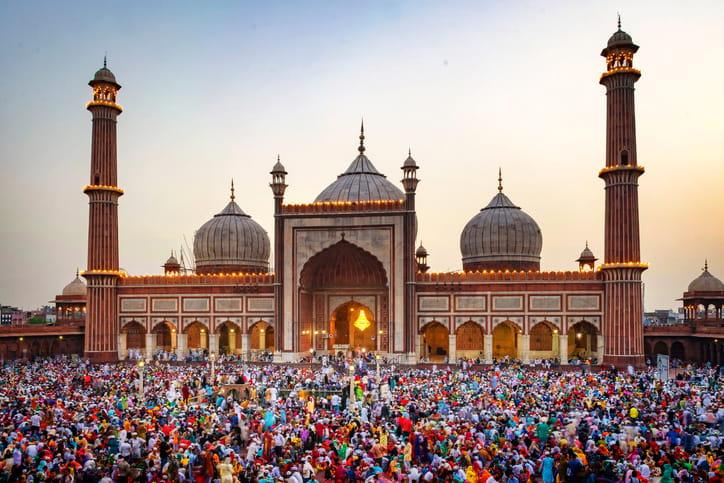
By afternoon, make your way to Jama Masjid, commissioned by Shah Jahan in 1650. With its three marble domes and towering minarets, it remains one of India’s largest mosques.
Day 2: A Full Day of Food
You will spend the second day in Old Delhi, with the aroma of slow-cooked lentils and layered flatbreads wafting through narrow lanes. Seek out a plate of puffed bread served with chickpeas and pickled vegetables.
By midday, wander through the labyrinthine alleys near ancient havelis (mansions). Let your plate have a mix of delicate rice and saffron, tender meat stewed in yogurt and cardamom, and lentils tempered with clarified butter and cumin.
Around the evening, sample lightly spiced kebabs grilled over charcoal, or vegetables wrapped in flaky flatbreads with a smear of chutney, followed by rice pudding garnished with saffron and rosewater. A few famous Delhi-delicacies are Nihari, Korma, Dilli-style Biriyani, Shab Deg, Bhuna Ghost, and Yakhni Pulao.
Day 3: Explore the Delhi Monuments
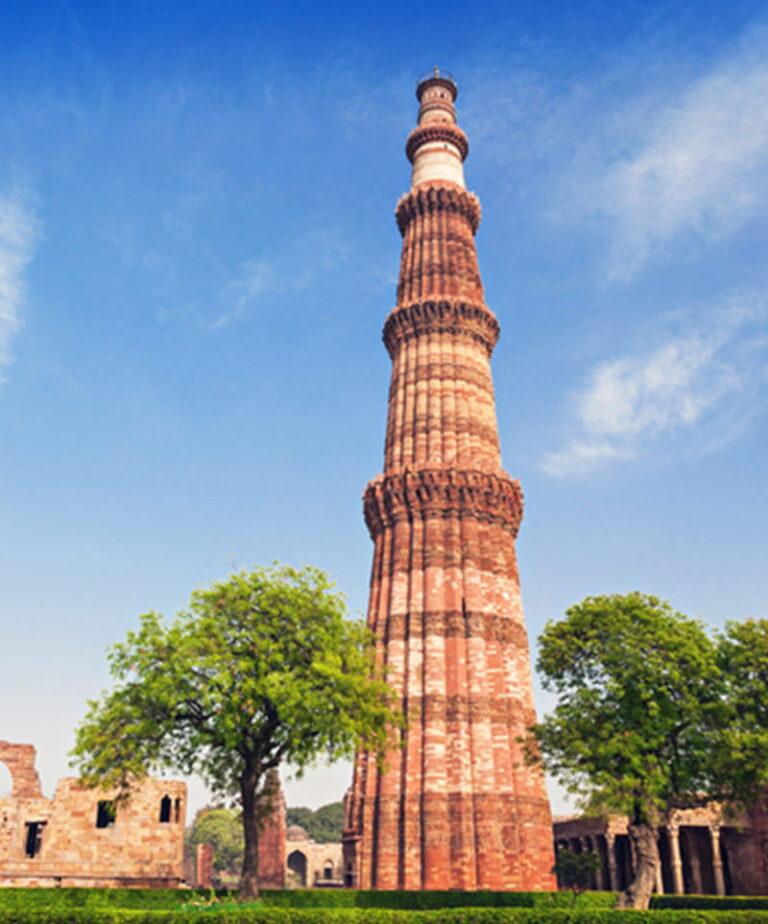
On the third day of your Delhi-tour, visit Qutub Minar, built in 1192 by Qutb-ud-din Aibak – founder of the Mamluk or Slave Dynasty and the first Sultan of Delhi, and later extended by his successor Shams ud-Din Iltutmish. It stands seventy-three meters tall, wrapped in alternating angular and fluted bands of red sandstone with Arabic script. Beside it lies the Iron Pillar, older than Delhi itself, its rust-proof surface still remains a mystery.
Next, visit Safdarjung’s Tomb, a Mughal structure from 1754. Set within a charbagh-style garden, its sandstone and marble facade conceal fading traces of Mughal ornamentation, standing as a monument to Nawab Safdarjung and a reflection of a fading empire.
Head to Rashtrapati Bhavan and Rajpath in the afternoon. Designed by Sir Edwin Lutyens and Herbert Baker, this ceremonial axis was the British Crown’s grand statement of authority. The Rashtrapati Bhavan, once the Viceroy’s House and now the official residence of the President of India, is a colossus of 340 rooms, crowned with a dome inspired by the Great Stupa of Sanchi.
Visit India Gate, a 42-meter-high war memorial built in 1931 to honor over 70,000 Indian soldiers who died fighting for the British Empire in World War I. Then visit The Red Fort, built by Mughal Emperor Shah Jahan in 1648 and served as the main residence of the Mughal emperors. Made of red sandstone, it is where the Prime Minister hoists the national flag on Independence Day each year.
If time allows, end your journey at Purana Qila or the “Old Fort”. It is one of the oldest surviving forts in Delhi, believed to have been built on the site of the ancient city of Indraprastha mentioned in the Mahabharata. Commissioned by Humayun and later completed by Sher Shah Suri in the 16th century, the fort exemplifies a blend of Mughal and Afghan architectural styles.
Day 4: Museums and Markets
You can begin your day at the National Museum, housing over 200,000 artifacts, from Harappan seals and Ashokan edicts to Mughal miniatures and tribal masks. Then stroll into Janpath for souvenirs, embroidered kurtas (traditional clothes), silver jewelry, and Tibetan art.
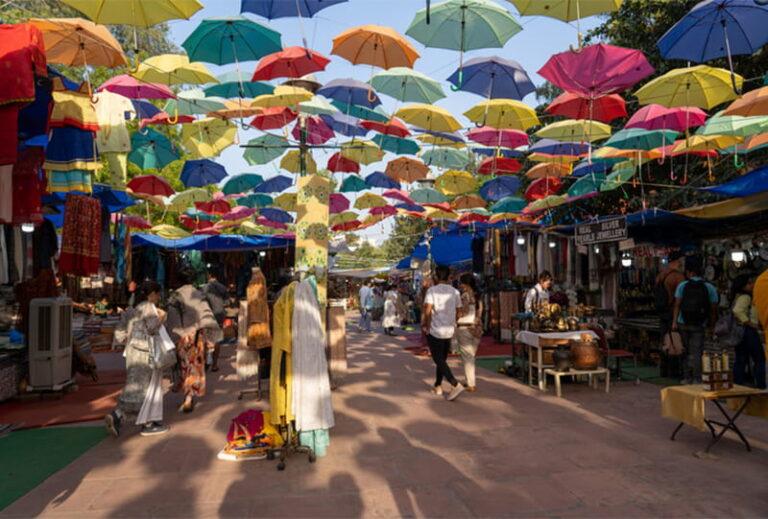
Head to Dilli Haat, an open air market that offers produce from all over the country. Deal directly with the artisans etc. Also, food from all over the countrycan be tested in this one place.
By midday, head to Connaught Place, the colonial-era marketplace designed in concentric circles. Have lunch at one of the vintage restaurants or coffee houses from the British colonial times.
In the evening, explore Agrasen ki Baoli, a 14th-century Stepwell and descend its 103 stone steps. End the day at India Habitat Centre or Mandi House, where you can catch a classical dance performance, a play, or a poetry reading if schedules align.
Day 5: Temples and Forts
You can start early at the Lotus Temple, shaped like a blooming lotus. Completed in 1986, it’s twenty-seven marble petals form nine sides to symbolize unity and universal harmony.
Continue on to ISKCON Temple, a vibrant Vaishnavite (dedicated to Lord Vishnu) temple filled with rhythmic chants, murals of Lord Krishna’s life, and aromatic temple food. Nearby lies the Kalkaji Mandir, one of Delhi’s oldest and most revered temples.
By afternoon, visit the Hauz Khas Complex, where 14th-century ruins, mosques, tombs, and a madarsa (Islamic school), lie beside a reservoir.
End your Delhi journey at the Mehrauli Archaeological Park. Climb up to Jamali Kamali Mosque or Balban’s Tomb.
How Ruhani Guides Your Trip
We at Ruhani provide self-guided packages, where you have the freedom to customize your tour according to your needs. Reach out to our team via the contact form below for more details.
Contact a Ruhani Travel Advisor Right Away
In case of any emergency, medical or otherwise, you can contact the Ruhani support team at any point in your travels. We are here to assist you throughout.
- (+1) 301-250-6943
- contact@ruhaniindia.com

100% Custom-Made
- Every itinerary can be further personalized according to your own personal needs and wants.
- Authentic slow travel experiences handpicked exclusively by our expert team.
- Prioritize your freedom and be responsible towards the environmental burdens of mainstream tourism.
- Select your preferred destination and choose for yourself how you want to experience that region.

Why Choose Ruhani?

Soulful Tour Packages
- We make India matter to women-only groups and intrepid travel-enthusiasts.
- Our tour packages portray a unique and broad perspective of India.


In-Depth Expertise & Support
- We believe in the power of soulful tourism with an all-encompassing need to gain knowledge.
- Under any emergency, medical, informational, or otherwise, our team will assist you in every way.