Across Sands and Palaces
Rann of Kutch, Thar Desert & Jaipur, India
- Location
Gujarat and Rajasthan, Western India
- Nearest Airports
Bhuj Airport (BHJ)
- Nearest Railway Stations
Bhuj Railway Station
- Highlight
Rich cultural experience in the Rann of Kutch salt desert, Thar Desert, and Jaipur’s royal forts teeming with crafts, music, dance, and shopping
- Duration
8 Days / 7 Nights
India’s cultural canvas is an ever-shifting mural, best absorbed not through hurried sightseeing but through mindful cultural immersion. The desert arc of Western India, imbued with silence of the Rann of Kutch, the gleaming dunes of the Thar Desert and the regal allure of Jaipur, has a way of sharing an intimate glimpse into the soul of a land that sings in embroidery, dances in camel shadows, and remembers its stories through handcrafts and textiles. It is here, in these sunlit sands and royal settlements of Gujarat and Rajasthan, that Indian cultural tourism finds its essence.
Also, this route is less about places and more about people, with Maldharis crafting bells in their quiet corners, Manganiyar singers evoking centuries of poetry beneath the stars, and Rajasthani artisans weaving local clothing.
In this unique cultural tour of India, you can expect painted mud walls, ghoomar swirling in courtyards, camel caravans at dusk, and slow-cooked meals eaten cross-legged under thatched ceilings. It is a transformation into a heritage that keeps its authenticity alive.

Highlights of the Tour:
- Watch the Rann of Kutch light up under a full moon during the Rann Utsav, with folk music and local handicraft markets
- Visit traditional Kutchi villages like Nirona to see Rogan art and copper bell-making firsthand.
- See (do not ride) camels in the Thar Desert and attend a Manganiyar musical evening in a desert camp near Khuri.
- Explore the frescoed havelis of Jaipur’s old city and take a miniature painting workshop with a Rajasthani artist.
- Stay in eco-conscious mud homestays and desert camps run by local communities and artisans.
An Eight-Day Itinerary of the Cultural Circuit Across Gujarat and Rajasthan
Day 1: Bhuj - Dhordo
Distance from Bhuj: 80 km
Transportation: Shared car or taxi (approx. 2 hours)
On reaching Bhuj, the Capital of Kutch, you can take a shared cab to Dhordo Village, 80 km away from Bhuj, nestled at the absolute edge of the Great Rann of Kutch. Yes, this is where the famous Rann Utsav takes place every year between November and February. Even without the festival, you can still admire the traditional contrasts of this region.
- Admire the bhungas (mud houses) adorned with Lippan Kaam, a fusion of mud and mirror work.
- Visit the local artisans to explore their leather work, bandhani (tie-dye) and embroidery.
- Stay at a local homestay and savor the authentic Kutchi thalis (traditional Indian platter).
- In some eco-resorts, cultural programs are arranged with traditional dance forms for a sneak-peek at the local culture.
Day 2: Dhordo - Nirona - Dholavira
Distance from Dhordo to Nirona: 50 km
Nirona to Dholavira: 110 km
Transportation: Private car or taxi
A quiet and authentic Kutchi village, Nirona is your chance to have a face-to-face encounter with how the artisans craft their handicrafts. You can even watch the entire process and support the artisans and weavers by directly buying souvenirs from them.
- Learn about the world-famous Rogan art, a 300-year-old painting technique practiced by a handful of Kutchi families. A unique art of painting with castor oil-baked paint, which was made especially famous by the native Khatri family.
- You can also learn about Ghantadi, the craft of copper bell making, from the Lohar community.
- The intricate patterns using lac (resin) and natural dyes, creating beautiful lacquer work by the Vadha community.
After spending half a day at Nirona, it is time to head to Dholavira for a night’s stay. Gear up for a 5-6-hour drive through the salt desert, a road known more popularly as ‘Road to Heaven’.
Day 3: Dholavira - Rann of Kutch
Distance from Dholavira to Rann of Kutch – 150 km
Transportation: Private car or taxi (4-5 hours)
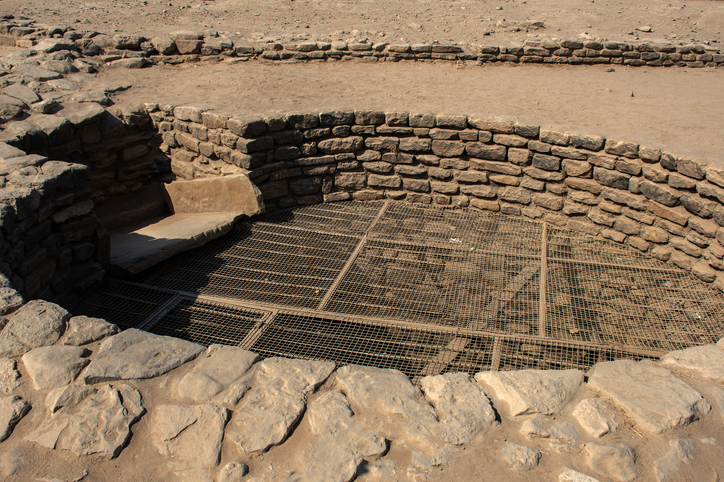
Dholavira is the ancient Harappan civilization’s archaeological site, preserving master engineering feats with meticulously planned urban structural remnants and drainage system. Take a tour of this historical site and on your way back you will again drive through the Great Rann of Kutch.
A white patch of salt-stretch, one of the largest salt-deserts in the world, the Great Rann of Kutch is nature’s unreal creation. This region, in West-Central India bordering Pakistan, is an expanse of saline mudflats, divided into both the Great Rann and the Little Rann. This is where you experience a 300-km-long crystal-white landscape which was once a shallow part of the Arabian Sea. With a geographical shift, the region closed its connection with the sea and formed a marshy salt desert.
Day 4: Rann of Kutch - Jaisalmer
Distance from Rann of Kutch to Jaisalmer: 300 km
Transportation: Private car (7-8 hours), or flight/train from Bhuj to Jaisalmer
Drive or take a short flight or train to Jaisalmer (via Bhuj-Jodhpur route). Spend the evening resting or watching sunset from the Jaisalmer Fort, one of the few “living forts” in the world. This fort has a special nickname ‘Shonar Kella’ from a famous Satyajit Ray (famous Indian film-maker) movie. Stay in a traditional haveli homestay with latticed windows and courtyards for an immersive experience.
Day 5: Khuri - Thar Desert
Distance from Jaisalmer to Khuri: 45 km
Transportation: Taxi or desert camp arranged transport (1-1.5 hours)
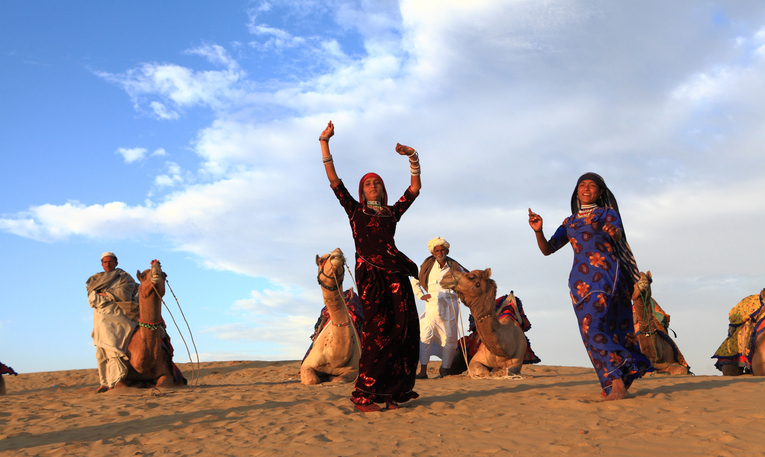
45 km southwest of Khuri village (45 km), you will reach a desert camp or mud hut near the sand dunes. Spend your day watching camels vanishing into the vast horizon of Thar and listening to Manganiyar folk singers under a sky full of stars. Thar desert is famous for stargazing, with good chances of spotting shooting stars throughout the night. Dinner is vegetarian and slow-cooked; millet rotis (Indian flat breads), ker sangri (a traditional Rajasthani dish made from dried berries and desert beans), and warm bajra khichdi (pearl millet and lentil porridge) by firelight, a traditional dessert meal.
Every evening, a desert dance performance is arranged with traditional folk dances like Ghoomar, Bhavai, Kalbelia, and Matka dance, where dancers rhythmically balance decorated earthen pots on their heads while moving gracefully to lively music.
Quick Reminder: Remember that it is an unethical practice to ride camels for tourism purposes. So be mindful to not ride camels in the Thar Desert.
Day 6: Return to Jaisalmer
Distance from Khuri to Jaisalmer: 45 km
Transportation: Taxi or camp transport (1-1.5 hours)
Jaisalmer, the golden city. The lanes of this old town are splattered yellow in every direction. You can visit old mansions like Patwon ki Haveli and Nathmal ki Haveli and explore hand-embroidered textiles sold by locals in labyrinthine alleys.
Enjoy a delectable vegetarian Rajasthani Thali lunch on a rooftop cafe overlooking the fort.
You can also learn the basics of block printing from a local artisan in a small workshop in Jaisalmer.
Day 7: Jaisalmer - Jaipur
Distance: 750 km
Transportation: Overnight train or flight (via Jodhpur) or private car (12-14 hours)
Take a train or drive to Jaipur (overnight trains run regularly from Jaisalmer to Jaipur). After a long and tiring train journey, get settled in your homestay in Jaipur and take the day off to restore your energy.
In the evening, take a leisurely stroll through the humming bazaars of Johari and Bapu, filled with textiles, colorful bangles, and handcrafted mojaris (traditional footwear) inviting you to explore Rajasthan’s artisan heritage. For an authentic shopping experience, visit Tripolia Bazaar to buy brassware and lac bangles, and Nehru Bazaar for trendy clothing and souvenirs.
Day 8: Explore Jaipur
Explore Amber Fort with a local guide who shares not just history, but local folklore. Adorned with yellow and pink sandstones facing Maotha Lake, Amber Fort in Jaipur is presumed to have borrowed its name from Ambikeshwar (an avatar of Lord Shiva), or from Amba (another name of Goddess Durga).
Amer Fort is adjoined to Jaigarh Fort, through an underground tunnel and several others, but they are not accessible to tourists. It is a 1-km hike through the dark tunnel all the way to Jaigarh Fort. There is a concrete road from outside Amer Fort in case you do not want to hike. But it is definitely more adventurous to walk through the tunnel formerly used by the ancient Rajput community (a Rajasthani royalty)
Best Time to Visit to Travel across these Places
November to February is the best time for the cultural tour across Gujarat and Rajasthan. It also coincides with the festival season (Rann Utsav, Desert Festival) with clear skies for stargazing.
How Ruhani Guides Your Trip
We at Ruhani provide self-guided packages, where you have the freedom to customize your tour according to your needs. Reach out to our team via the contact form below for more details.
Contact a Ruhani Travel Advisor Right Away
In case of any emergency, medical or otherwise, you can contact the Ruhani support team at any point in your travels. We are here to assist you throughout.
- (+1) 301-250-6943
- contact@ruhaniindia.com

100% Custom-Made
- Every itinerary can be further personalized according to your own personal needs and wants.
- Authentic slow travel experiences handpicked exclusively by our expert team.
- Prioritize your freedom and be responsible towards the environmental burdens of mainstream tourism.
- Select your preferred destination and choose for yourself how you want to experience that region.
Why Choose Ruhani?

Soulful Tour Packages
- We make India matter to women-only groups and intrepid travel-enthusiasts.
- Our tour packages portray a unique and broad perspective of India.

In-Depth Expertise & Support
- We believe in the power of soulful tourism with an all-encompassing need to gain knowledge.
- Under any emergency, medical, informational, or otherwise, our team will assist you in every way.