An Architectural Tour of India
Orchha, Khajuraho, Varanasi, Sarnath, Kushinagar, Aurangabad, Ajanta, Ellora, Rameshwaram, Airavatesvara, Lepakshi and Hampi
- Location
Madhya Pradesh, Uttar Pradesh, Maharashtra, Tamil Nadu, Andhra Pradesh, Karnataka
- Nearest Airports
Gwalior (GWL), Khajuraho (HJR), Varanasi (VNS), Gorakhpur (GOP), Aurangabad (IXU), Madurai (IXM), Tiruchirappalli (TRZ), Bengaluru (BLR)
- Nearest Railway Stations
Jhansi (for Orchha), Khajuraho, Varanasi, Sarnath, Gorakhpur (for Kushinagar), Aurangabad, Jalgaon (for Ajanta), Rameshwaram, Kumbakonam, Hindupur (for Lepakshi)
- Highlight
A consolidated Indian architectural circuit covering temple towns, Buddhist heritage sites, cave marvels, and sacred cities.
- Duration
19D/18N
Beyond aesthetics, a tour of India’s architectural wonders is also about understanding the cultural and spiritual beliefs that shaped these incredible structures. Visiting these sites allows one the thrill of witnessing the evolution of Indian architecture, from rock-cut caves to tall spires.
The architectural masterpieces of Orchha, Khajuraho, Ajanta-Ellora are set in picturesque locales, singularly bound by historical and ancient traditions. These temples and caves are repositories of art, with their elaborate carvings and sculptures narrating stories of deities, kings, and celestial beings. “Stories in stone” relate India’s complex historical events. In this architectural tour of India, you will gain an enriching experience; an opportunity to explore both the spiritual and artistic heritage of India. For students of architecture, this can prove to be an extremely enriching experience.
Highlights of the Tour:
- Marvel at the Bundela dynasty’s architectural grandeur and the unique Chaturbhuj Temple
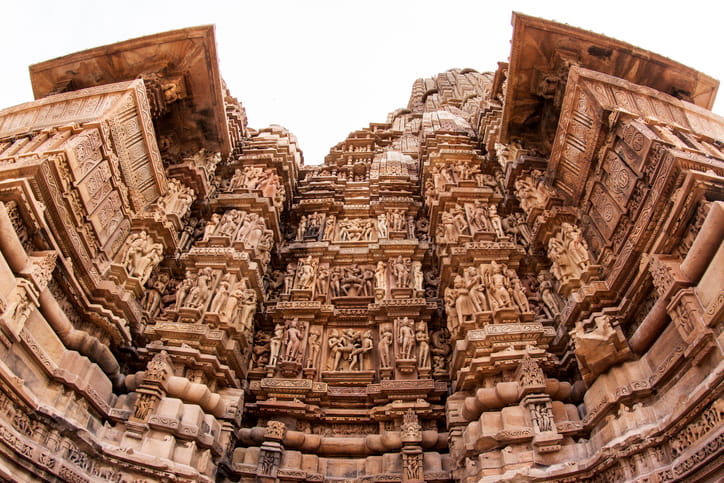
- Discover the Kamasutra temples world-famous for their exquisite erotic sculptures that are also a part of the ancient culture of India.
- Learn about the spiritual depth of Varanasi, one of the only cities in the world continuously inhabited since ancient times (since 1800 BCE).
- Explore the UNESCO World Heritage sites, where Buddhist, Hindu, and Jain temples are carved into rock, as a confluence of India’s diverse religious heritages.
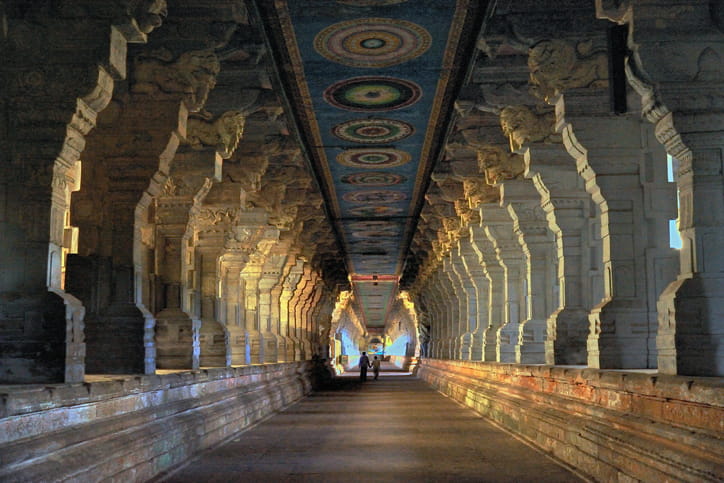
- Visit the iconic Ramanathaswamy Temple with its grand corridors, a specimen of Dravidian architecture.
- Admire the frescoes and the mind-bending ‘hanging pillar’ at the 16th-century Lepakshi Temple.
A Seventeen-Day Itinerary of the Architectural Tour of India
Travelling has the power of nourishing your soul, if done right. We take full responsibility for your upcoming travel plans. We customize immersive cultural tours across the Indian States and the Union Territories tailoring to your specific needs.
Day 1: Arrival in Orchha
Distance: 190 km from Jhansi
Transportation: Train to Jhansi from Delhi/Mumbai, then a taxi to Orchha
Orchha, located on the banks of the Betwa River, is a historical town famous for its Bundela Rajput architecture. Begin your exploration with Raja Mahal and Jahangir Mahal. At Raja Mahal, you will observe intricately painted murals depicting scenes from the epics Ramayana and Mahabharata, and at Jahangir Mahal, Mughal-Bundela fusion architecture features Islamic domes, hanging balconies, and chhatris (domed pavilions). This is one of the very few places in the world where one gets to see such Hindu-Muslim convergence.
Day 2: Explore Orchha
Visit the Ram Raja Temple to get a taste of the blend of Rajput and Mughal architecture. Afterwards, take a leisurely boat ride on the Betwa River, while admiring the open views of Orchha’s temples and forts.
Later, drop by the Laxminarayan Temple. The temple does not follow a typical linear temple plan. It has a rectangular layout with octagonal towers at the corners and is built on a raised platform with a ramp-like approach.
Day 3: Orchha to Khajuraho
Distance: 175 km (5-6 hours)
Transportation: Train or Private Taxi
From Jhansi Railway Station, take a train to Khajuraho Railway Station. Trains are limited, so check schedules in advance.
Depart for Khajuraho, a UNESCO World Heritage Site famous for its extraordinary temples dedicated to Hindu and Jain gods. The temples are spread across various parts of the town, with the western cluster displaying the most elaborate and well-preserved Hindu temples, celebrated for their intricate carvings, while the eastern side is home to a number of beautiful Jain temples, reflecting the region’s deep religious harmony.
The Western Group of Temples includes the Kandariya Mahadev Temple, Lakshmana Temple, Vishvanatha Temple, Chitragupta Temple, Devi Jagadambi Temple, and Matangeshwar Temple. These temples are world-famous for their exquisite Nagara-style architecture, stone carvings, and intricate erotic sculptures.
Day 4: Khajuraho Temples
On the fourth day, you will visit the Eastern Group of Temples and admire the less crowded yet equally impressive mammoth structures. The Eastern Group of Temples in Khajuraho primarily consists of Jain temples, along with a few Hindu temples. The Jain temples are Parsvanatha Temple, Adinatha Temple, Shantinatha Temple, and Ghantai Temple, whereas the Hindu Temples are Brahma Temple, Hanuman Temple, Vamana Temple, and Javari Temple.
The Parsvanatha Temple features delicate lotus motifs, geometric patterns, and serene Tirthankara (Jain spiritual teacher) images carved into sandstone. The Ghantai Temple, though partly in ruin, displays a majestic bell-and-chain motif on its pillars, while the Adinatha Temple has an elegantly sculpted shikhara (spire), and fine ornamental detailing that reflects a more restrained, spiritual aesthetic compared to the more sensual art of the Western Group.
Day 5: Varanasi
Transportation: Direct train (8-10 hours)
Take the day slow after a long train journey. In the evening, meander through Varanasi’s old parts and narrow lanes, visiting Jain temples and heritage havelis whose wood-mastery shows the works of royal patrons and artisan hands.
Varanasi is one of the world’s oldest continuously inhabited cities, with a history dating back to around 1800 BCE. It is a unique example of a living heritage city, where ancient religious practices, especially along the ghats(river fronts) of the Ganges, continue alongside the developments of modern urban life.
Day 6: Evening Aarti in Varanasi
On the sixth day, explore the ancient Kashi Vishwanath Temple, its golden spires reaching upward as a symbol of eternal devotion.
Pay a visit to the Tulsi Manas Temple with its red sandstone façade carved with scenes from the Ramayana, and the Bharat Mata Temple, a unique homage to Mother India, built as a giant relief map in marble.
Later, pause at the tranquil Bharat Kala Bhavan Museum to see ancient manuscripts and sculptures that reflect the region’s artistic heritage.
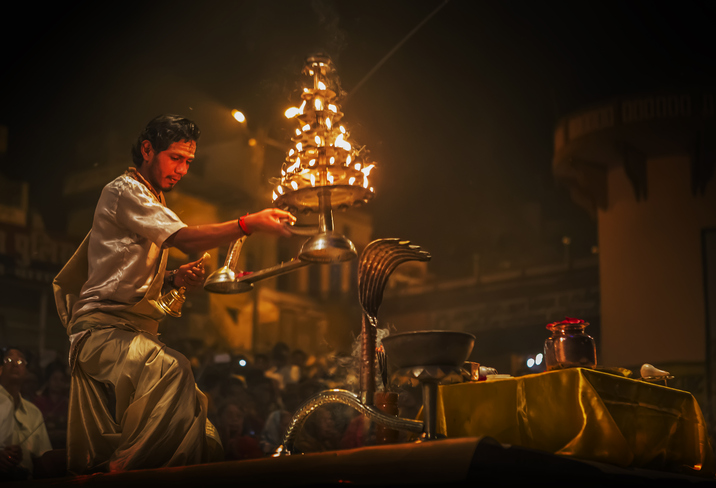
As dusk descends, gather by Dashashwamedh Ghat to witness the Ganga Aarti(prayer), where fire, incense, and bells create a sacred dance on the river, a consolidated and magnetic ritual of devotion and spirituality.
Day 7: Varanasi - Sarnath
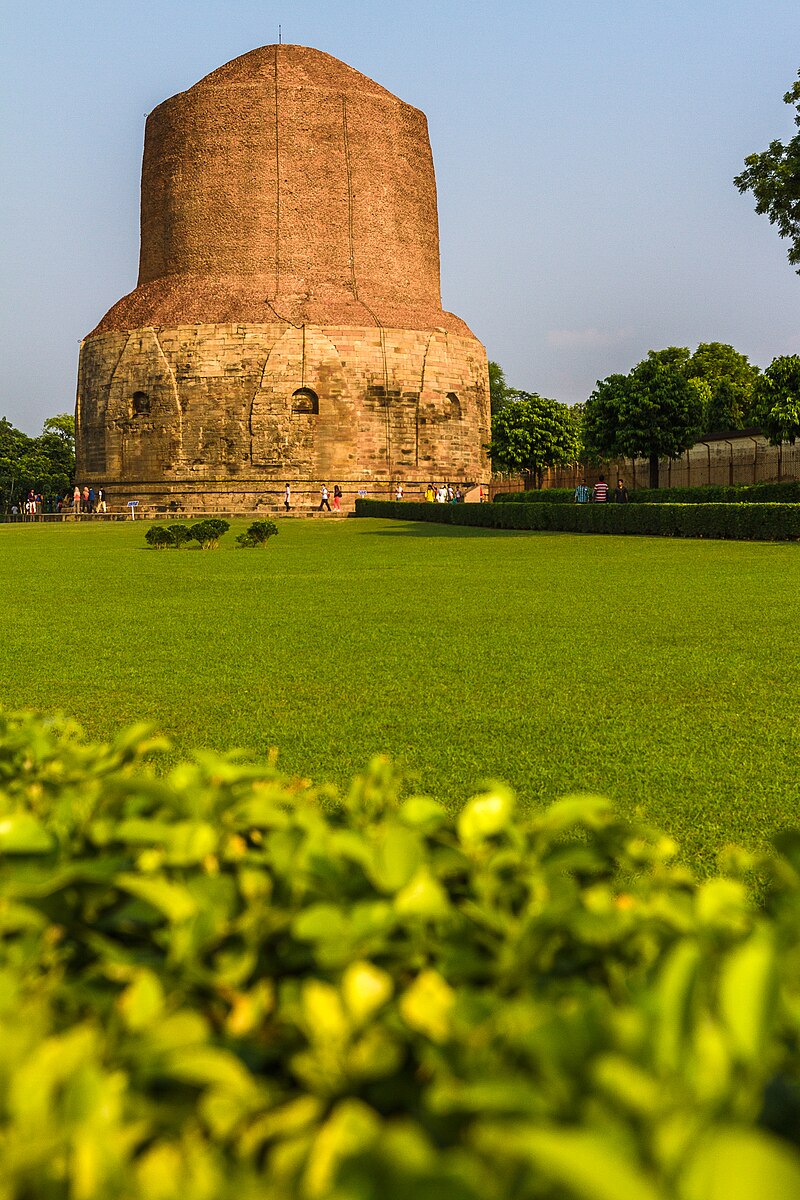
A short drive leads you to Sarnath, an important Buddhist pilgrimage site, where the Buddha gave his FIRST sermon to his four disciples. Stand before the Damek Stupa, a massive cylinder of intricately carved stone that marks the exact spot of the Buddha’s teaching. Trace the detailed floral and geometric patterns, understanding how the vibrations here were once a vessel for spiritual awakening.
The Sarnath Museum preserves the momentous Lion Capital of Ashoka, a symbol immortalized as India’s national emblem.
Day 8: Sarnath - Kushinagar
Venture further east to Kushinagar, the revered site where the Buddha attained Parinirvana(bliss). The landscape here is gentler, less crowded, and makes way for contemplative exploration.
Explore the Parinirvana Stupa, an immense mound sheltering a reclining Buddha statue, symbolizing his peaceful passing. The surrounding temples and monasteries display exquisite stone carvings and serene gardens designed for reflection.
In the evening, walk the tranquil pathways lined with ancient pillars and prayer wheels, absorbing the silence that speaks louder than words.
Spend your day visiting the Japanese Temple, Thai Temple, and Myanmar Golden Pagoda, each a reminder of the universal Buddhist reverence for Kushinagar. Observe the harmonious blend of indigenous and foreign architectural styles, telling stories of cultural confluence.
Day 9: Khajuraho - Aurangabad
Distance: 420 km
Transportation: Train to Aurangabad
Arrive in Aurangabad and ease into the day with a slow wander through its Mughal past. Start with Bibi Ka Maqbara, a strikingly familiar structure often called the ‘Mini Taj’, commissioned by Aurangzeb’s son in memory of his mother.
From there, head to the Aurangabad Caves, lesser-known Buddhist caves perched above this gated city.
Wind down with a walk around Panchakki, a 17th-century water mill that once powered a kitchen for hundreds of Sufi pilgrims (a Muslim sect).
For dinner, explore local eateries that serve up tambda rassa (spicy red curry) or you can always order a Maharashtrian thali (traditional Indian platter).
Day 10: Ellora Caves - Daulatabad Fort - Grishneshwar Temple
Distance from Aurangabad: 30 km
Transportation: Local buses or hired cabs
Start the day with thirty-four cave-temples at Ellora Caves, carved between the 6th and 10th centuries CE.
Even though a local guide will direct you throughout, it is still advisable to start from Cave 16, the awe-inspiring Kailasa Temple, carved top-down from a single volcanic rock. Spend the day moving around the Buddhist viharas (monasteries) and Jain shrines scattered across a 2-kilometre stretch.
Later in the day, if you have time, stop by the Grishneshwar Temple, one of the twelve Jyotirlingas (sacred Shiva shrines) in India. Just a few minutes away is Daulatabad Fort, once considered impenetrable, with its sinuous staircases and echoing bat caves.
You will return to Aurangabad and spend the night there.
Day 11: Ajanta Caves
Distance: 100 km (3 hours from Aurangabad)
Transportation: Hired cab or MSRTC bus
Take an early morning ride to the Ajanta Caves located inside a horseshoe-shaped gorge incised in solitude alongside the Waghora River. Dating back to the second century BCE, these twenty-nine caves are an evocative canvas of Buddhist mural artworks and chaitya halls (prayer halls).
The solidity of these caves is mystical and architecturally hewn. Cave 1 and Cave 2 hold marvelous frescoes like Bodhisattva Padmapani (the Lotus Bearer) and Vajrapani (the Thunderbolt Bearer). Cave 26 stands out for its detailed Mahaparinirvana sculpture of the reclining Buddha.
Day 12: Aurangabad – Bengaluru – Lepakshi
Fly from Aurangabad to Bengaluru in the morning. From there, drive 2.5–3 hours north to the quiet village of Lepakshi in Andhra Pradesh.
Day 13: Lepakshi Temple
Frescoed ceilings, serpentine Naga pillars, and the famed ‘hanging pillar’ add a unique perspective to Lepakshi Temple, which depicts the mythology of Ramayana on its walls. One of its extraordinary features is a granite column, the ‘hanging pillar,’ that does not fully touch the ground, you can slide a cloth or paper underneath it.
It is believed to represent a perfect balance of design and precision from the Vijayanagara era. Later, relax at your homestay or return to Bengaluru for the night.
Day 14: Bengaluru – Hampi
Distance: 350 km (6–7 hours by train or car)
Catch an early morning train or private cab to Hosapete. From there, it is a short auto-ride to the surreal landscapes of Hampi. Stay at a riverside guesthouse or heritage homestay and enjoy an evening walk near Virupaksha Temple.
Day 15: Explore Hampi
Hampi’s sacred and royal precincts are a mindful rendezvous along the boulevard of time. This boulder-strewn landscape, almost otherworldly, is home to architectural masterpieces like Virupaksha Temple, Hemakuta Hills, Vittala Temple with its stone chariot and musical pillars, and the Queen’s Bath.
Conclude your day atop Matanga Hill for a breathtaking sunset over the surreal ruins.
Day 16: Hampi – Kumbakonam
Distance: 400-500 km
Take an overnight train or combination of train and cab via Bengaluru or Tiruchirappalli to reach Kumbakonam. Break the journey if needed with a short stay in Thanjavur.
Day 17: Airavatesvara Temple & Kumbakonam Temples
The morning light spills gently over the stone sculptures of Airavatesvara Temple in Darasuram, a smaller but intricately built masterpiece of the Chola era. Built by Rajaraja Chola II in the 12th century, it is part of the UNESCO-listed “Great Living Chola Temples”. The temple features a stone chariot mandapam, similar in concept to Hampi’s but smaller and exquisitely carved.
Later, explore Sarangapani, Adi Kumbeswarar, and Nageswaran temples in Kumbakonam. Sample South Indian filter coffee at a local “kaapi” stall and unwind.
Day 18: Kumbakonam – Rameshwaram (via Thanjavur stop)
Distance: 240 km
Break your journey with a visit to the monumental Brihadeeswarar Temple in Thanjavur, a UNESCO World Heritage Site. Built in the 11th century by Raja Chola I, it boasts a 66-meter vimana made entirely of granite.
Continue your drive to Rameshwaram. Upon arrival, check in and walk to the seashore for a sunset at Agni Theertham. Optional: Visit the ghost town of Dhanushkodi or stroll along the iconic Pamban Bridge.
Day 19: Explore Rameshwaram
The Ramanathaswamy Temple is known for its towering gopurams (spires) and the longest corridor among all Hindu temples in India. Pilgrims bathe in twenty-two sacred teerthams (ponds of sacred water), each said to have different healing properties.
According to legend, Lord Rama installed the lingam here to atone for killing the demon king – Ravana. Despite Rameshwaram having no granite quarries, the temple was built with stones transported from afar, a feat of ancient engineering.
How Ruhani Guides Your Trip
We at Ruhani provide self-guided packages, where you have the freedom to customize your tour according to your needs. Reach out to our team via the contact form below for more details.
Contact a Ruhani Travel Advisor Right Away
In case of any emergency, medical or otherwise, you can contact the Ruhani support team at any point in your travels. We are here to assist you throughout.
- (+1) 301-250-6943
- contact@ruhaniindia.com

100% Custom-Made
- Every itinerary can be further personalized according to your own personal needs and wants.
- Authentic slow travel experiences handpicked exclusively by our expert team.
- Prioritize your freedom and be responsible towards the environmental burdens of mainstream tourism.
- Select your preferred destination and choose for yourself how you want to experience that region.
Why Choose Ruhani?

Soulful Tour Packages
- We make India matter to women-only groups and intrepid travel-enthusiasts.
- Our tour packages portray a unique and broad perspective of India.

In-Depth Expertise & Support
- We believe in the power of soulful tourism with an all-encompassing need to gain knowledge.
- Under any emergency, medical, informational, or otherwise, our team will assist you in every way.