The Caves That Have Stood the Test of Time
Aurangabad, Maharashtra, India
- Location
Aurangabad district, Maharashtra
- Nearest Airports
Aurangabad Airport (IXU)
- Nearest Railway Stations
Aurangabad Railway Station
- Highlight
Rock-cut caves displaying 2nd-century BCE Buddhist art, Hindu and Jain temple architecture, and frescoes preserved in basalt
- Duration
3D/2N
Hidden away in the volcanic folds of the Deccan Plateau lie two of India’s most iconic UNESCO Heritage Sites, the Ajanta, and Ellora Caves. Sculpted over centuries, these monumental caves are a harmonic blend of three faiths: Buddhism, Hinduism, and Jainism. Ajanta caves are adorned with exquisite murals with Chaitya (prayer) halls tucked deep in a horseshoe-shaped gorge, while at Ellora, we have caves with exquisite carvings, an example being the famed Kailasa Temple, a single monolith that was carved top-down, a work of highest mastery that defies imagination even today.
As you enter these gigantic caves, you will be stunned not just by the massiveness of these hand-carved caves but also by the stillness that lingers in their stone walls. At Ajanta, the paintings still tell stories of Bodhisattvas (enlightened beings) under fading halos, and Ellora’s rock-temples echo devotion chiseled into permanence. These caves are more than relics, they are reminders of what patience, precision and meticulousness look like when stretched over time.

Highlights of the Tour:
- Walk through Ajanta’s prayer halls that date back over 2,000 years and are adorned with ancient frescoes.
- Visit the Kailasa Temple in Ellora, the largest monolithic structure in the world.
- Witness the confluence of three religious faiths, Hindu, Buddhist, and Jain
- Hike up to viewpoints overlooking the Waghora River valley for panoramic views.
- Engage with local artisans reviving ancient painting techniques near the site.
A Three-Day Itinerary for Ajanta & Ellora Caves
Day 1: Explore Aurangabad
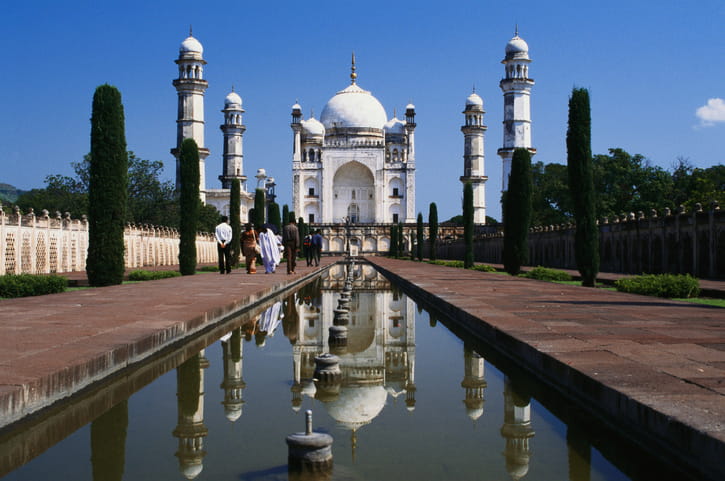
Arrive in Aurangabad and ease into the day with a slow wander around its Mughal past. Start with Bibi Ka Maqbara, a strikingly familiar structure often called the ‘Mini Taj’, commissioned by Aurangzeb’s son in memory of his mother.
From there, head to the Aurangabad Caves, lesser-known Buddhist caves perched above this gated city.
Wind down with a walk around Panchakki, a 17th-century water mill that once powered a kitchen for hundreds of Sufi(a Muslim sect) pilgrims.
For dinner, explore local eateries that serve up tambda rassa (spicy red curry) or you can always order a Maharashtrian thali (traditional Indian platter).
Day 2: Ellora Caves - Daulatabad Fort - Grishneshwar Temple
Distance from Aurangabad: 30 km
Transportation: Local buses or hired cars.
Start the day with thirty-four cave-temples at Ellora Caves, carved between the 6th and 10th centuries CE. Even though a local guide will direct you throughout, it is still advisable to start from Cave 16, the awe-inspiring Kailasa Temple, carved top-down from a single volcanic rock. Spend the day moving around the Buddhist viharas and Jain shrines scattered across a 2-kilometre stretch.
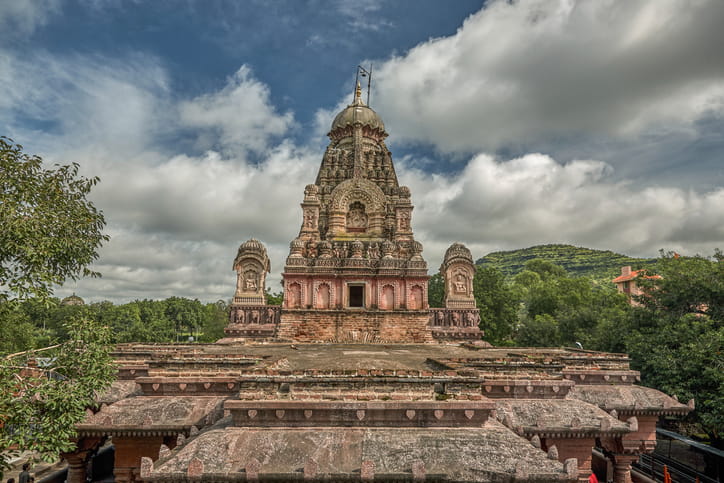
Later in the day, if you have time, stop by the Grishneshwar Temple, one of the twelve Jyotirlingas (stone representations of Lord Shiva) in India. Just a few minutes away is Daulatabad Fort, once considered impenetrable, with its sinuous staircases and echoing bat caves.
Return to Aurangabad and spend the night there.
Day 3: Full Day at Ajanta Caves
Take an early morning ride to the Ajanta Caves, located inside a horseshoe-shaped gorge, incised in solitude alongside the Waghora River. Dating back to the second century BCE, these twenty-nine caves are an evocative canvas of Buddhist mural artworks and Chaitya halls (prayer halls).
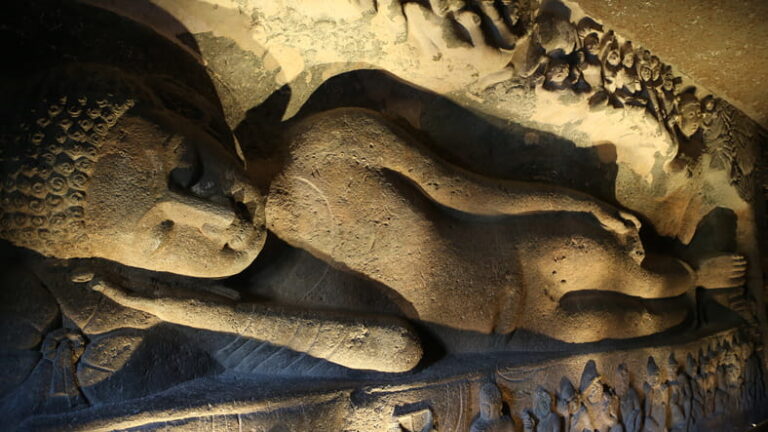
These caves are beautifully carved from solid rock, with a sense of mystery. Cave 1 and Cave 2 have marvelous frescoes like Bodhisattva Padmapani (the Lotus Bearer) and Vajrapani (the Thunderbolt Bearer). Cave 26 stands out for its detailed Mahaparinirvana sculpture of the reclining Buddha.
Day 4: Markets and Textile Hubs in Aurangabad
Aurangabad itself is a fascinating town with local markets and traditional crafting bases. At the Himroo Weaving Centre, you can observe the making of rich brocade shawls once woven for nobility. If you are looking for souvenirs, browse through Paithani sarees, handmade leather flip-flops & Kolhapuri chappal that was featured in a PRADA fashion show in 2025, or local pickles at Gulmandi or Connaught markets.
Best Time to Visit Ajanta & Ellora
October to March is the best time to visit the Ajanta & Ellora caves. This is the time when the sun’s intensity is mellow, and the caves draw in shadow and detail. Avoid the summer months, as the interiors of the caves can get humid and travelling becomes taxing.
How Ruhani Guides Your Trip
We at Ruhani provide self-guided packages, where you have the freedom to customize your tour according to your needs. Reach out to our team via the contact form below for more details.
Contact a Ruhani Travel Advisor Right Away
In case of any emergency, medical or otherwise, you can contact the Ruhani support team at any point in your travels. We are here to assist you throughout.
- (+1) 301-250-6943
- contact@ruhaniindia.com

100% Custom-Made
- Every itinerary can be further personalized according to your own personal needs and wants.
- Authentic slow travel experiences handpicked exclusively by our expert team.
- Prioritize your freedom and be responsible towards the environmental burdens of mainstream tourism.
- Select your preferred destination and choose for yourself how you want to experience that region.
Why Choose Ruhani?

Soulful Tour Packages
- We make India matter to women-only groups and intrepid travel-enthusiasts.
- Our tour packages portray a unique and broad perspective of India.

In-Depth Expertise & Support
- We believe in the power of soulful tourism with an all-encompassing need to gain knowledge.
- Under any emergency, medical, informational, or otherwise, our team will assist you in every way.