The Indian Heritage of Religion, Culture and Architecture

Rameshwaram, Airavatesvara, Mysore, Lepakshi, and Hampi, India

Tamil Nadu, Andhra Pradesh & Karnataka

Madurai (RMM), Trichy (TRZ), Bangalore (BLR), Hubli (HBX)

Rameshwaram, Kumbakonam, Hindupur (near Lepakshi), Hospet (for Hampi)

A cultural and architectural journey across South India’s most iconic temples. The long corridors of Rameshwaram, the UNESCO-recognized Airavatesvara, the unique pillars of Lepakshi, the surreal stone symphony of Hampi and the ornate carvings of Mysore temples.

10D/9N

The Southern States of India have a perfect blend of spirit, creativity and innovation, chiseled across centuries. This temple trail takes you through the distinct architectural fervor of the Southern States and introduces you to Rameshwaram, artistry of the Chola dynasty in Darasuram’s Airavatesvara temple, mural-rich Lepakshi temple, the surreal boulder terrain of Hampi, and the intricate stonework of Mysore temples.

Highlights of the Tour:

A Ten-Day Itinerary of the Temple Tour across the Southern States

Day 1: Madurai - Rameshwaram
Distance: 170 km

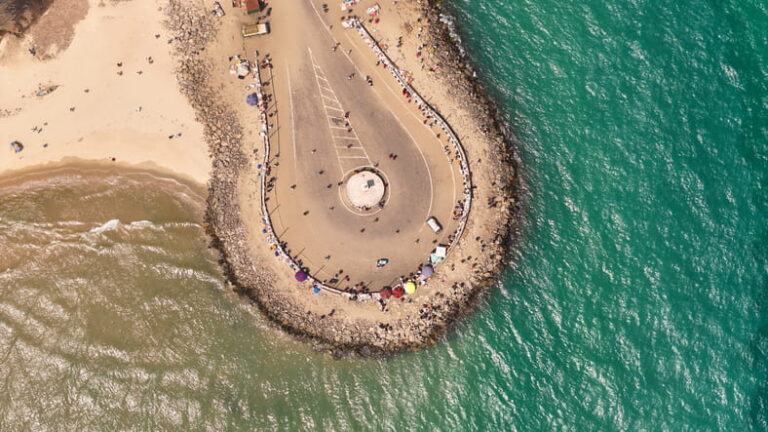
Take an early morning flight or /train to Madurai. From there, board a bus or shared cab to Rameshwaram. After check-in, walk to the seashore for a sunset view near Agni Theertham. Adventurers can explore the ghost town of Dhanushkodi and walk along the picturesque Pamban Bridge, facing the sea. Stay overnight in Rameshwaram.

Madurai - Rameshwaram

Towering gopurams (spires) and finely carved stone corridors – the Ramanathaswamy Temple has the longest corridor among all Hindu temples in India. There are 22 sacred teerthams (ponds of sacred water) inside the temple complex, each with water that tastes different and is believed to have healing properties. Pilgrims traditionally bathe in all 22 before entering the inner sanctum. Even though Rameshwaram had no granite quarries, the massive granite blocks were transported from far-off places, highlighting the mastery of the builders.

Distance: 240 km

Take half a day and explore Brihadeeswarar Temple, an architectural and engineering marvel. Brihadeeswarar Temple was built by Chola emperor Raja Chola I in the 11th century. The temple is renowned for its massive sixty-six meters-tall vimana (tower) and is a UNESCO World Heritage Site as part of the “Great Living Chola Temples”.

Then continue to Kumbakonam, a temple town wrapped in the Chola (dynasty) influence. Rest awhile and sip traditional South Indian filter coffee at a local “kaapi” stall while watching life go by in the thriving marketplace. You can pair it with a crispy dosa or vada (popular snacks) under the temple shade.

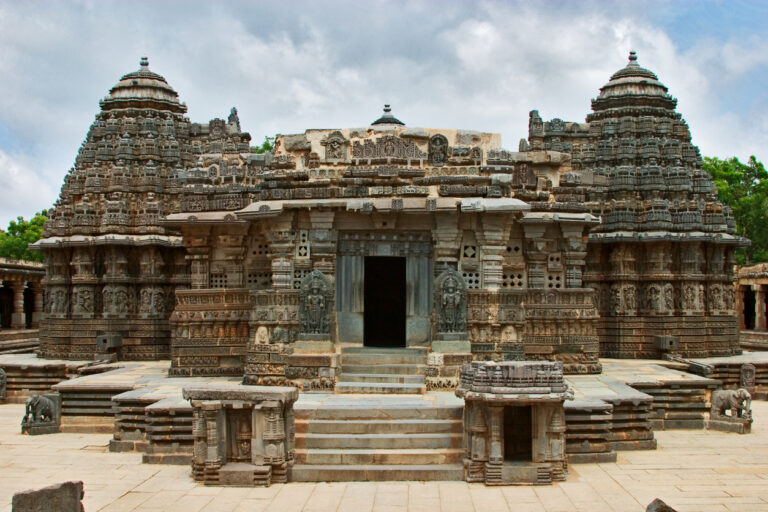
Explore the stone sculptures of Airavatesvara Temple in Darasuram, a smaller but intricately built masterpiece of the era of the Chola dynasty. Built by King Rajaraja Chola II in the 12th century, the temple is part of the UNESCO World Heritage Site group known as the “Great Living Chola Temples”. Observe the miniature friezes and carved steps that echo to musical notes when tapped.

The temple features a remarkable stone chariot mandapam (hall), constructed like a chariot drawn by horses, akin to the one at Hampi but smaller and carved in exquisite detail.

Return to Kumbakonam and explore nearby temples like Sarangapani, Adi Kumbeswarar and Nageswaran.

Airavatesvara Temple & Kumbakonam Temples

Distance: 400+ km

You can either take an overnight train via Chennai or a flight to Bangalore, then drive up to Lepakshi in Andhra Pradesh, 120 km from Bangalore. If you arrive late, take it slow and do not rush to explore the town immediately. Consider it a buffer day and restore your energy for the day ahead.

Frescoed ceilings, serpentine Naga (snake) pillars and the famed ‘hanging pillar’ make Lepakshi Temple unique with depictions of the story of Ramayana on its walls. One of its extraordinary features is a granite column, the ‘hanging pillar’ that does not fully touch the ground. You can slide a cloth or paper underneath it. It’s believed to be at an intersection of balance and engineering from ancient times, demonstrating the builders’ precision. Stroll quietly through its sandstone courtyards. Later, relax at a homestay or return to Bangalore for the night.
Lepakshi Temple

Distance: 350 km (6-7 hours by train or car)

Catch an early morning train or cab to Hospet, and from there a short auto ride to Hampi. It’s always recommended to stay at a riverside guesthouse. Rest or take a slow evening walk across the market area near Virupaksha Temple.

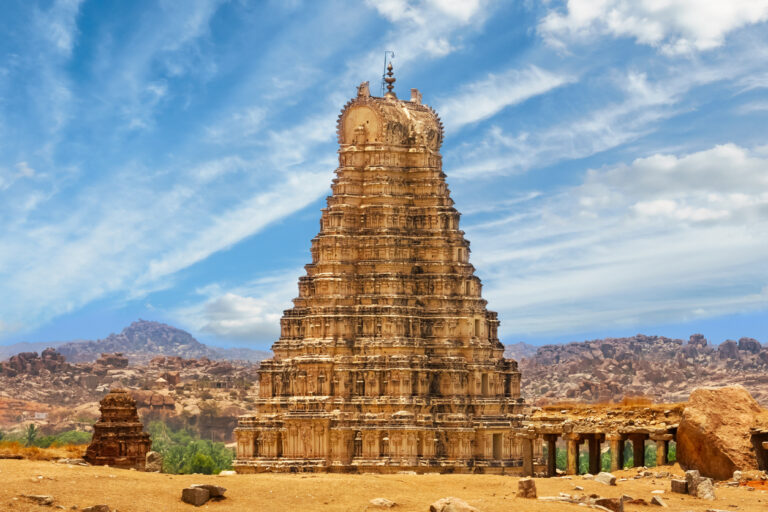
Hampi’s sacred and royal precincts are a mindful reminder of forgotten time. This boulder-landscape, almost barren-like, is a living example of the intricate artwork of masters who left their indelible mark on the Virupaksha Temple, Hemakuta Hills, Vittala Temple with the stone chariot and musical pillars, and the Queen’s Bath.

After a whole day of exploration, you can end your day atop Matanga Hill with one of the most surreal sunsets over bouldered ruins. The river in Hampi is the Tungabhadra River, which flows through the UNESCO World Heritage Site of Hampi. Circular boats used on the river are called coracles, made of bamboo and plastic or tar, traditionally used for short river crossings.

Hampi Ruins and Temples

Visit Mysore Palace, the city’s iconic royal residence, famous for its lavish interiors and intricate woodwork.

Later on, you can explore the Jaganmohan Palace Art Gallery nearby to admire traditional and modern Indian paintings. Head to Brindavan Gardens, just outside Mysore, to enjoy the beautiful landscaping and the spectacular musical fountain show at sunset.

Visit Chamundi Hill Temple, dedicated to Goddess Chamundeshwari; to enjoy the panoramic views of Mysore city from the hilltop. Explore the nearby Nandi Bull statue, carved out of a single granite rock.

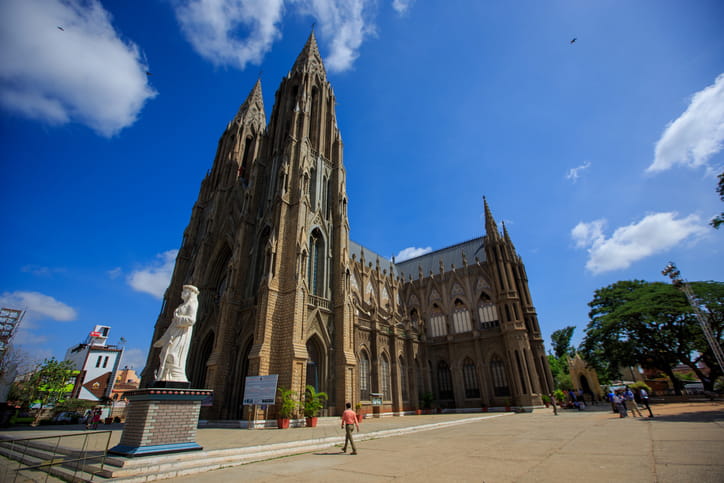
Head to St. Philomena’s Cathedral, a stunning example of Neo-Gothic architecture in Mysore.

In the evening, you can walk through the bustling Devaraja Market for a taste of local life, spices, flowers, and souvenirs.

Explore Mysore

The best time for the South Indian temple tour is October to March, when the southern heat gives way to cool winds and temple stones remain warm underfoot, not scorching.

How Ruhani Guides Your Trip

We at Ruhani provide self-guided packages, where you have the freedom to customize your tour according to your needs. Reach out to our team via the contact form below for more details.

Contact a Ruhani Travel Advisor Right Away

In case of any emergency, medical or otherwise, you can contact the Ruhani support team at any point in your travels. We are here to assist you throughout.

100% Custom-Made

100% Custom-Made

  • Every itinerary can be further personalized according to your own personal needs and wants.
  • Authentic slow travel experiences handpicked exclusively by our expert team.
  • Prioritize your freedom and be responsible towards the environmental burdens of mainstream tourism.
  • Select your preferred destination and choose for yourself how you want to experience that region.
Why Choose Ruhani

Why Choose Ruhani?

Soulful Tour Packages

Soulful Tour Packages

  • We make India matter to women-only groups and intrepid travel-enthusiasts.
  • Our tour packages portray a unique and broad perspective of India.
Why Choose Ruhani
In-Depth Expertise & Support

In-Depth Expertise & Support

  • We believe in the power of soulful tourism with an all-encompassing need to gain knowledge.
  • Under any emergency, medical, informational, or otherwise, our team will assist you in every way.