10 Traditional Festivals You Must Attend in India
The Indian festivities begin with colors, fire, devotion, and dance. In a land where seasonal turnover is frequent and every month brings about a new celebration, India is a country that hosts unique festivals across cultures, religions, and traditions, often on the golden sands of Pushkar or by the ancient ghats of Varanasi. To journey through India’s festivals is to lean into centuries of ritual, rhythm and riotous joy that comes from a sky full of lanterns, streets draped in marigolds, and the lingering aroma of sandalwood incense and rosewater in the air.
If you are planning to visit India anytime soon, you should consider timing your visit during one of these famous festivals to add a new experience to your travels. The Indian music, colours, rituals, food, and energy are unmatched during these festivals.
Here is a curated list of 10 Indian festivals that you surely cannot miss.
1. Holi - The Festival of Colors
When to go: March
Where to go: Vrindavan, Mathura, Barsana (Uttar Pradesh)
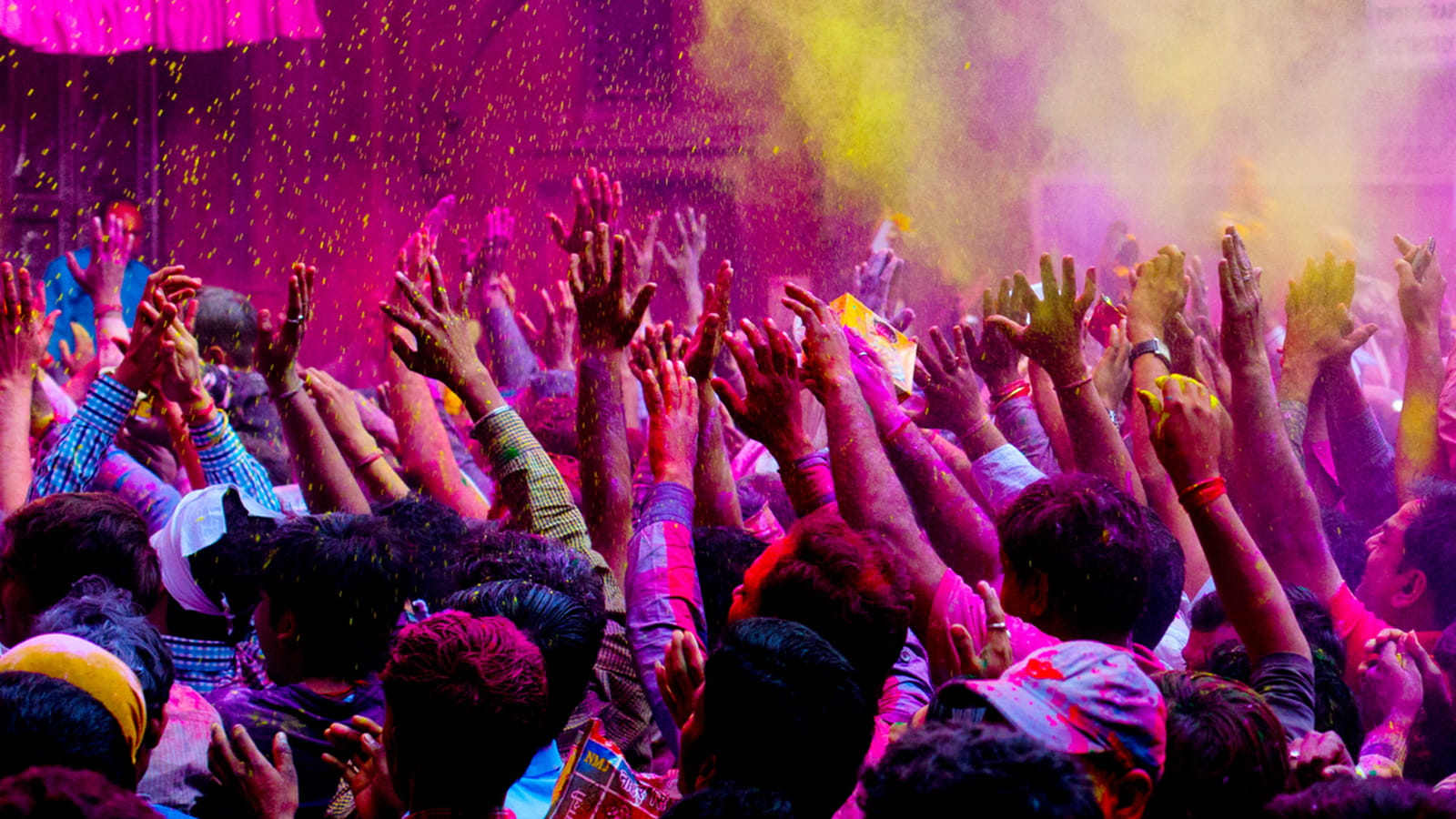
Holi, one of the most famous festivals in India, is rooted in ancient Hindu mythology. Holi celebrates the victory of good over evil, but beyond its spiritual significance, it is a celebration of joy and colours.
In every street corner, children chase each other with pichkaris (water guns), and the air turns thick with gulal (powdered skin-friendly colors). People laugh, dance with colours in their hair, and exchange sweets among friends and neighbors. There is something deeply intimate about it all, chaotic and joyful, with a bond of unspoken togetherness.
To experience Holi at its best, the temple towns of Mathura and Vrindavan in Uttar Pradesh are the best. Pushkar in Rajasthan also offers colourful Holi celebrations for two days straight.

2. Diwali - The Festival of Lights
When to go: October-November
Where to go: Varanasi, Jaipur, Udaipur
Diwali, often called the Festival of Lights, is one of the most cherished and widely celebrated festivals in India. It marks the return of Lord Rama to his kingdom after 14 years in exile, symbolizing the ultimate victory of light over darkness.
In the days leading up to Diwali, homes are cleaned with care, adorned with glowing diyas (oil lamps), and decorated with rangoli patterns made of colored powders or flower petals. Head to cities like Varanasi, where thousands of lamps are floated on the Ganges, or travel to Jaipur for its light displays across palaces and markets.
3. Durga Puja in Kolkata
When to go: September-October
Where to go: Kolkata in West Bengal
Held every autumn, Durga Puja in Kolkata honours the victory of Goddess Durga over the demon Mahishasura, symbolising the power of good to overcome darkness.
In December 2021, Durga Puja in Kolkata was added to UNESCO’s Representative List of the Intangible Cultural Heritage of Humanity, recognizing its deep cultural and social significance particularly its community spirit and rich artistic expression.
The main attractions are the pandals (temporary sheds/pavilions); some mimicking ancient palaces, others are inspired by tribal art or modern social themes. People gather on the streets in their finest attire, hopping from one pandal to another late into the night, pausing only to savour street food like phuchka and chaat.
This festival is lived through the rhythms of dhunuchi dance and the scent of incense. It is not unusual for visitors to find themselves swept into family rituals, being fed generous portions of bhog (sacred food), and invited to sit beside locals watching sindoor khela.
If you are in Kolkata around October, do not forget to be part of this grand Indian festival!

4. Onam in Kerala
When to go: August – September
Where to go: Kochi, Thrissur, Alleppey
In Kerala, traditional boat races run through lush backwaters, women arrange intricate floral carpets (pookalam), and families gather over a 26-dish vegetarian feast served on a banana leaf. Everything about Onam is earthy, grounded, and aesthetically beautiful.
Celebrated to welcome King Mahabali, Onam is a ten-day celebration of abundance, unity, and homecoming. You will hear the rhythmic beat of chenda drums and meet women in traditional sarees with gold borders performing thiruvathira dances in courtyard circles. Onam is certainly one of the best festivals celebrated in India.
5. Ganesh Chaturthi in Maharashtra
When to go: August-September
Where to go: Mumbai, Pune
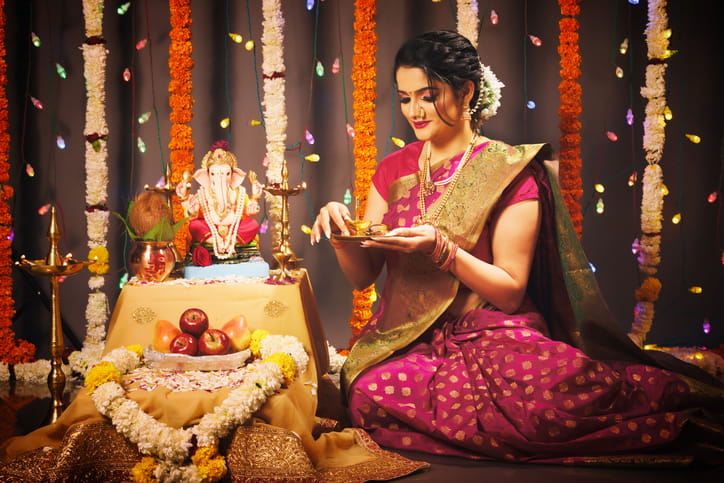
Every monsoon, Lord Ganesha, the remover of obstacles, is invited into homes and hearts with clay idols, chanting, and modaks (sweet dumplings). For ten days, Maharashtra, especially Mumbai, comes into life while welcoming one of India’s famous festivals, ‘Ganesh Chaturthi.’ Giant idols of Lord Ganesha are brought home or installed in elaborate public displays. There are morning prayers, aartis(hymns), and evenings filled with dance and dhol(drum) beats.
The most striking moment comes on the final day, during the visarjan (immersion), when the idols are paraded through the streets with music and colors. Crowds chant “Ganpati Bappa Morya!” as they carry Ganesha to the sea, promising to welcome him again next year.
6. Pushkar Camel Fair in Rajasthan
Where to go: Pushkar in Rajasthan
When to go: November
Set against the backdrop of Rajasthan, the Pushkar Camel Fair is like a desert carnival. What began as a simple livestock trading has evolved into a week-long celebration of tradition, art, and color, drawing in villagers, traders, musicians, and curious travelers from across the world.
At Pushkar Fair, you can expect moustache contests, turban-tying challenges, and traditional dance performances. Pushkar itself is a sacred town built around a quiet lake and home to one of the few temples dedicated to Lord Brahma. During the fair, sadhus offer blessings as camel herders make trading deals, and women apply mehndi(henna) inside makeshift tents.
7. Navratri in Gujarat
Where to go: Ahmedabad, Vadodara
When to go: September-October
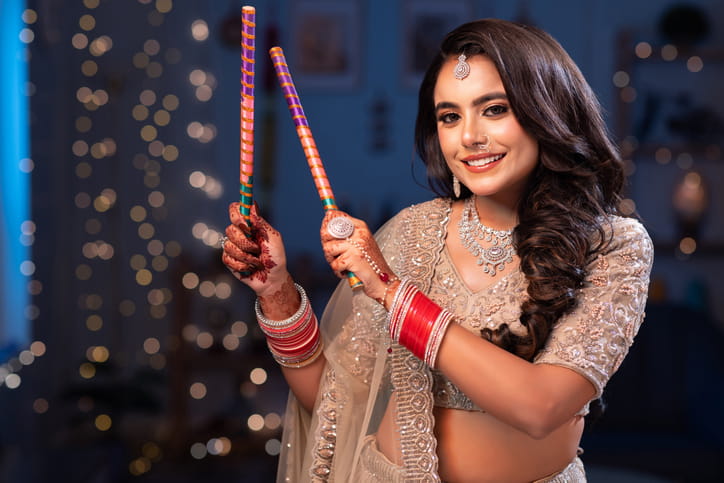
For nine consecutive nights, Gujarat comes alive with Garba and Dandiya Raas, traditional folk dances performed in rhythmic circles around a symbolic earthen lamp. Women dance in chaniya cholis and men move in sync with dandiyas (decorated sticks), celebrating one of the most famous festivals in India!
Ahmedabad and Vadodara are the two most iconic cities to experience the full spirit of Navratri. Foreigners are welcomed with open arms, often dressed by local hosts in Gujarati attire.
8. Pongal in Tamil Nadu
Where to go: Madurai, Thanjavur
When to go: January
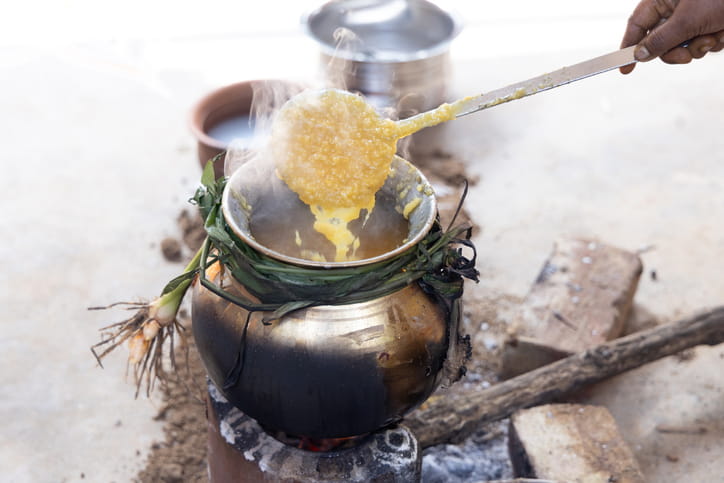
In Tamil Nadu, Pongal is a celebration of the sun god and land. Homes are decorated with banana leaves, kolam (chalk mandalas/designs), sweet rice is offered to the gods, and cows are painted and paraded to celebrate pastoral grazing.
At the heart of the festival is the cooking of the dish called pongal, made from freshly harvested rice, jaggery, and milk in clay pots placed under the open sky. While the celebration is deeply traditional in villages, cities like Madurai, Thanjavur, and Chennai also embrace Pongal with community feasts, folk dances, and temple rituals.
9. Bihu in Assam
When to go: April
Where to go: Guwahati, Majuli Island
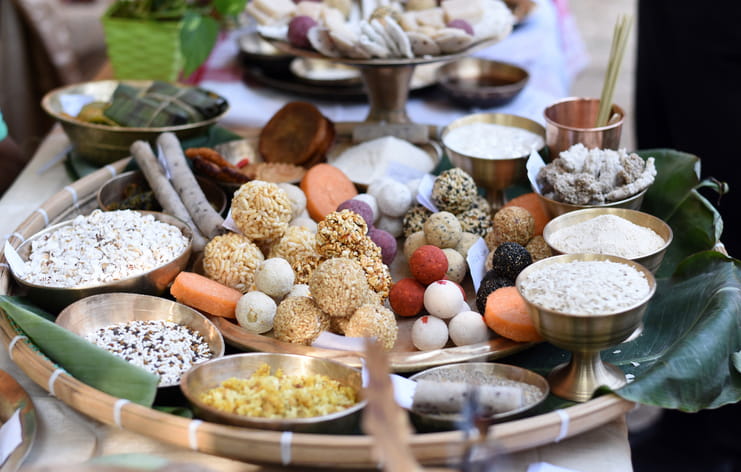
Bihu is not just one festival but three, each showing a seasonal shift. But the springtime Rongali Bihu is the most famous festival of them all as it marks the Assamese New Year and the season of sowing. Communities collectively give thanks to the earth, the animals, and the rhythm of rural life .
The festivities begin with traditional songs called Bihu geet, and graceful dances performed in open fields, usually by young men and women clad in vibrant mekhela chadors and red gamochas. Rice cakes (pitha), jaggery, and curd are shared with neighbors and guests.
The best place to experience the celebration is in Guwahati. But if you want something slower, more intimate, the quiet villages of Majuli Island, the world’s largest river island, offer a more intimate experience of Bihu.
10. Hemis Festival in Ladakh
When to go: June-July
Where to go: Hemis
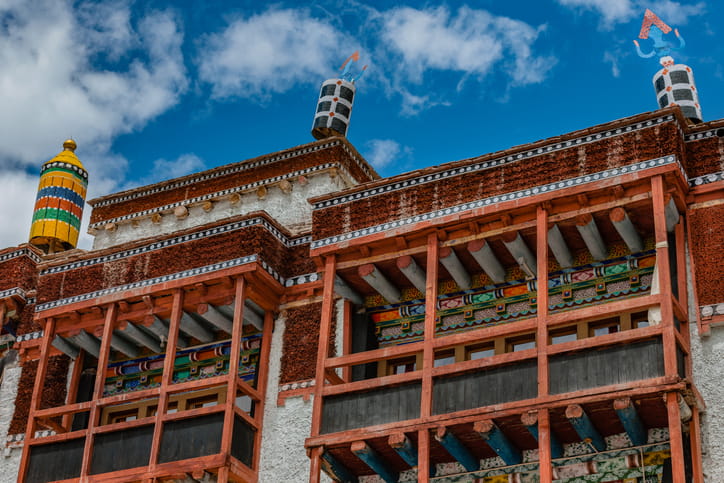
Hemis Festival is one of the grandest Buddhist celebrations in Ladakh, held every year in June or July. It takes place at the ancient Hemis Monastery, located amidst the stark, serene Himalayan mountains. This festival is dedicated to Guru Padmasambhava, the founder of Tibetan Buddhism, and symbolizes the triumph of good over evil, much like other Indian festivals that celebrate spiritual victory.
The highlight of the Hemis Festival is the mesmerizing Cham dance. Monks, dressed in elaborate brocade costumes and fearsome masks, perform slow, ritualistic movements to the beat of cymbals, drums, and long horns on the courtyard of the monastery.
Plan your Ladakh trip around June-July to attend this culturally rooted Buddhist festival!